


Ask someone who doesn’t live in Milan what comes to mind, and the answers are fairly predictable: the Duomo, La Scala, fashion. Give them another minute and you might get old money, intimidating waiters, The Last Supper.
Some cities you visit for the pleasure of discovering them. Others you return to so often that you stop expecting to discover anything. You know their face, their habits, the stories they like to tell about themselves. Then, one day, an old acquaintance does something you have never seen them do before.
I’ve been to Milan a million times. I even wrote a little portrait of him once: beautifully dressed, perfectly polite and capable of making you feel underdressed while wearing your best clothes. I thought I had his character more or less worked out.
This time I was there on business, just as the Formula 1 Grand Prix was taking place in Monza. As a conscientious visitor who loves fashion, I took a walk along Milan’s most famous shopping streets to see what was going on.
There was a queue outside Ferrari. A real, substantial queue, for Ferrari caps. Given the Grand Prix, fair enough. What made me laugh was that outside some of the expensive fashion houses, where there appeared to be about three customers inside, you were also asked to wait on the pavement.
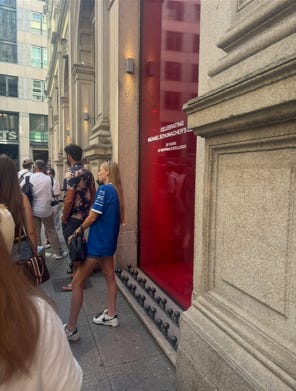
At Ferrari, the crowd had made a queue. At the other shops, the shops had made one.
The streets themselves offered an extraordinary concentration of heavyweight luxury. The established houses, one after another, occupying their magnificent spaces with the composure of people who have held the same seats at the opera for generations. I looked for the young, unruly names that might disturb the arrangement. On those streets, at least, they were hard to find.
The old brands were so polished they seemed almost cast in bronze. The fashion capital had become, in places, a monument to its own success.
And all the while, Milan was looking at you.
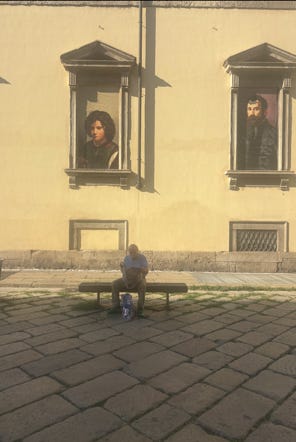
Not rudely. His eyes simply move very quickly, taking in your shoes, your watch, the way you carry yourself. Before you have decided what you think of him, he has formed an opinion about you.
One day, a security guard outside a shop asked me the time. I raised my arm to check my watch.
“Ah, what a watch!” he said.
The time, it turned out, was of no particular interest to him. For the rest of the walk I felt an absurd urge to turn the watch face inward.
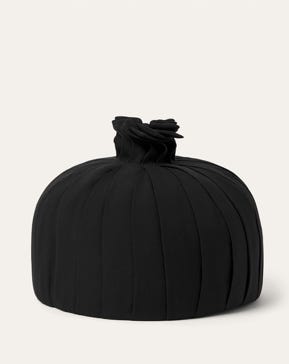
Inside Loro Piana, a saleswoman brought me a small procession of little hats. They were charming. They were also 3,800 euros apiece (I mean, what else a little hat could possibly cost) I had the feeling that if I had come in dressed differently, neither the hats nor the saleswoman would have spent quite so much time with me.
In Prada, the saleswoman looked at me with the weary irritation of someone interrupted in the middle of important business. Apparently, I was the interruption. I don’t think I’ll trouble her again.
Milan’s attention is selective. But it is attention.
At Golden Goose, I watched a man try on a leather jacket. It didn’t suit him at all. The jacket was here; the man was somewhere else. The saleswoman looked at him and said, “Now imagine you’re wearing black trousers and a white shirt.”
It was a brilliant move. She wasn’t selling him the jacket he had on. She was selling him the man who might wear it.
Milan does this constantly. In the windows, in the shops, in the little calculations people make about one another, he offers you a possible version of yourself. Sometimes you want to buy it. Sometimes you want to go home and check whether the version you arrived with was really so inadequate.
Once I started noticing Milan’s habit of appraising things, I heard it beyond the shops. In a taxi, the conversation turned to the price per square metre in the fashionable neighbourhoods. The driver knew the figures as readily as another person might know the names of the streets.
At a very expensive restaurant, after a dinner of seafood and French wine that cost us a small fortune, we were asked to leave almost as soon as we had finished. A moment earlier we had been guests. Now we were people occupying a table.
I found it outrageous. I also found it funny. Milan had managed to make us wait outside a shop with almost nobody in it and hurry out of a restaurant where we had just spent a fortune.
It would be easy to decide at this point that you have understood him. He knows the price of everything. He sorts people by what they wear. He can turn a dinner into a transaction the moment the bill is paid.
But then you walk into a pinacoteca.
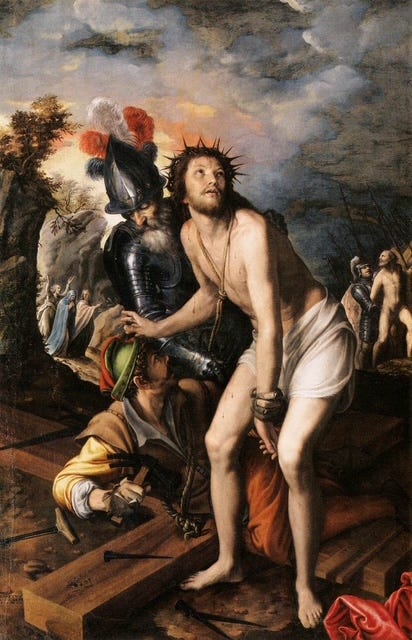
Or through a gate into a quiet, immaculate courtyard, while the heat outside presses against the stone. You notice the melancholy faces of the atlantes holding up a façade. And in the evening you sit at La Scala, listening to Britten, and realise that this city’s exacting taste reaches rather further than jackets and restaurant tables.
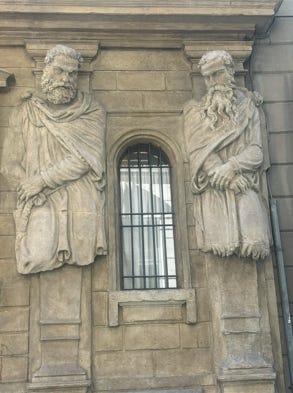
It is tempting to call this another side of Milan. I’m not sure it is. The eye that noticed my watch is also the eye that cared about the proportions of that courtyard. His ability to see what a thing is worth can be tiresome, funny, occasionally brutal. It can also be the beginning of discernment.
Perhaps this is why we return to certain places. You don’t meet an entirely new city. You catch a familiar one revealing something it had kept to itself.
Milan knows the price of almost everything. And after all these years, I’m still learning what he considers valuable.

Thank you for this wonderful portrait of Milan. I haven’t been there a million times — not even half a million 🙈 — but you described something I have always felt there and could never put into words so beautifully.
Milan and I have a rather unstable relationship. Every time I arrive, it’s a little emotional roller coaster: Oh, I love you! — followed surprisingly quickly by No, actually, I really don’t. 💔
The last time was especially funny. My son had been invited to play in one of the small halls at La Scala — what could possibly be a more beautiful reason to fall in love with Milan again? And yet somehow I spent half that trip complaining about the city. Then I would turn a corner, see something impossibly beautiful and forgive him again.
Perhaps it really is this constant feeling of being assessed — your shoes, your watch, the whole version of you. Even when I’m perfectly well dressed, I don’t particularly enjoy it. But maybe Milan becomes much more fun when you stop taking his judgement seriously and simply play along.
And I loved your thought that the eye noticing the price of your watch may be the very same eye noticing perfect proportions and real beauty.
Still, after playing Milan’s game for a few days, I’m always very happy to come home to Portugal, where nobody seems particularly interested in assessing me. 😉